
Morning House begins with a controlled inversion of the typical residential plot. Rather than distributing the building within the site, the mass is consolidated along the northern boundary, allowing the landscape to occupy the full depth of the property.
This linear organization establishes a clear relationship to the garden, but avoids the monotony of a stacked system. Each level is subtly shifted in plan, creating a layered composition where volumes are read independently rather than as a continuous slab. This introduces a more dynamic tectonic relationship between floors, where each level appears to rest against, rather than directly on top of, the other.
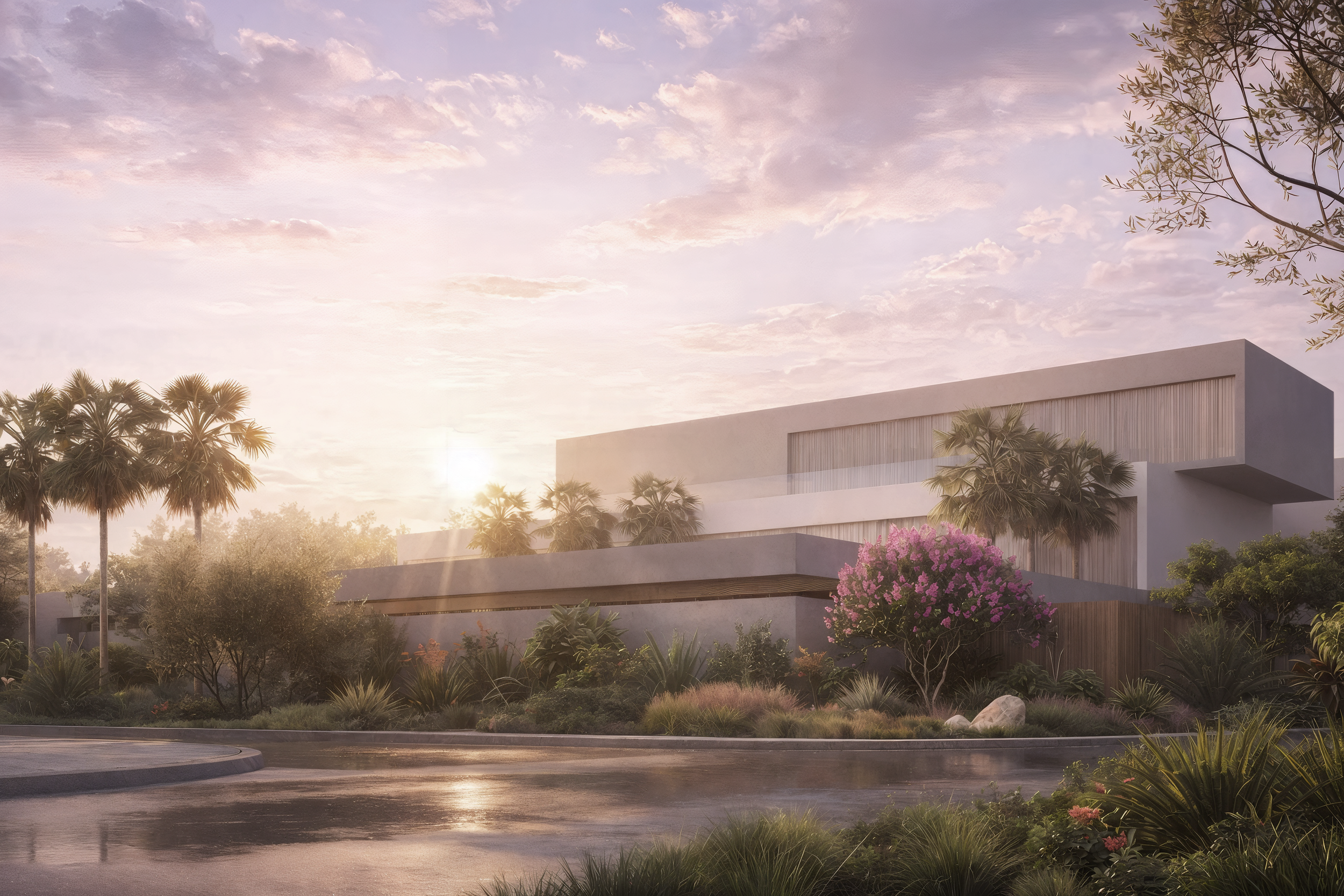
The project extends this logic beyond the building itself. Instead of treating the perimeter fence as a thin boundary, it is thickened and activated. Service elements are embedded within it, and its articulation follows the same linear language as the architecture. From the street, this transforms the fence into a perceived extension of the house, allowing the horizontal composition to begin before one actually enters the site.
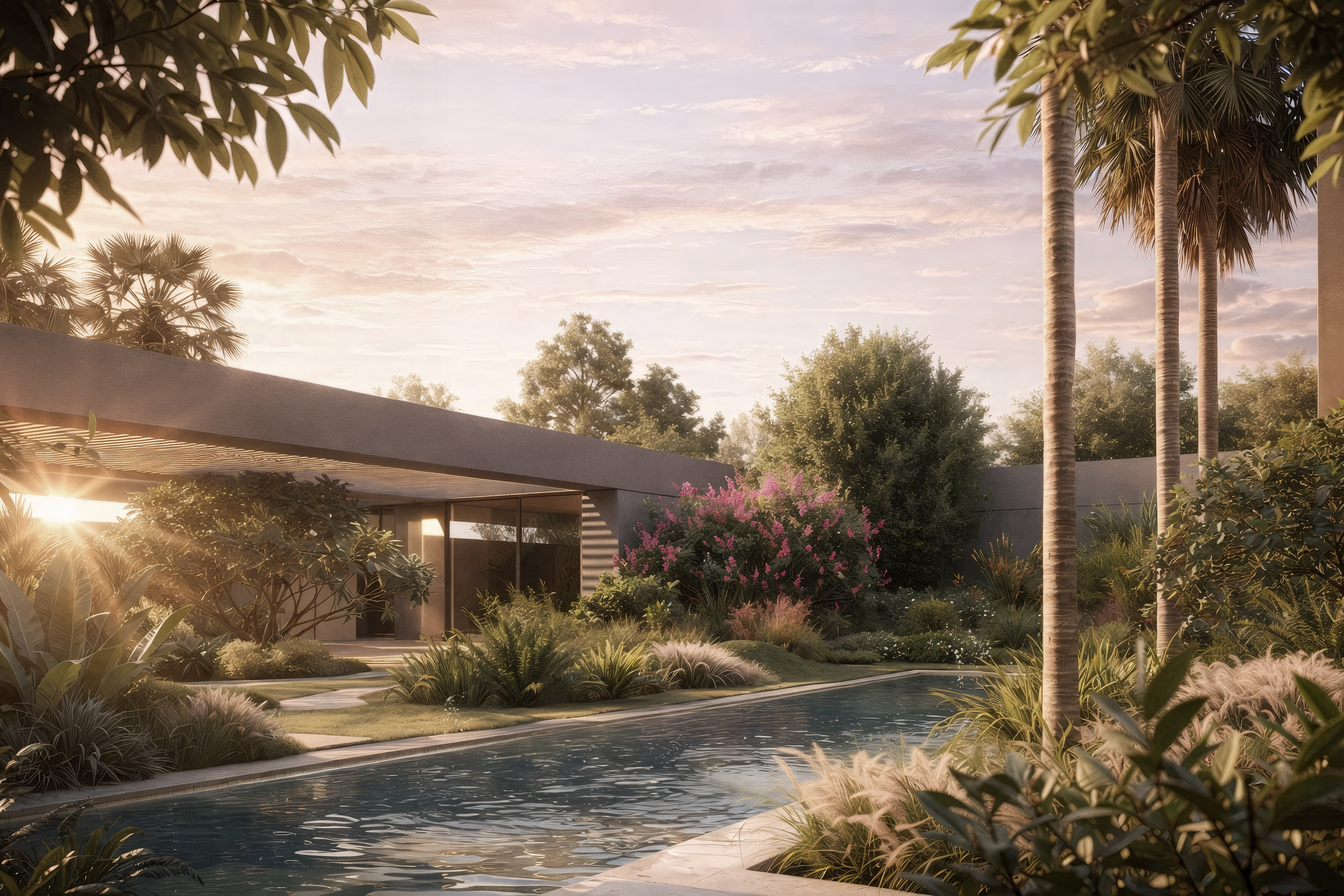
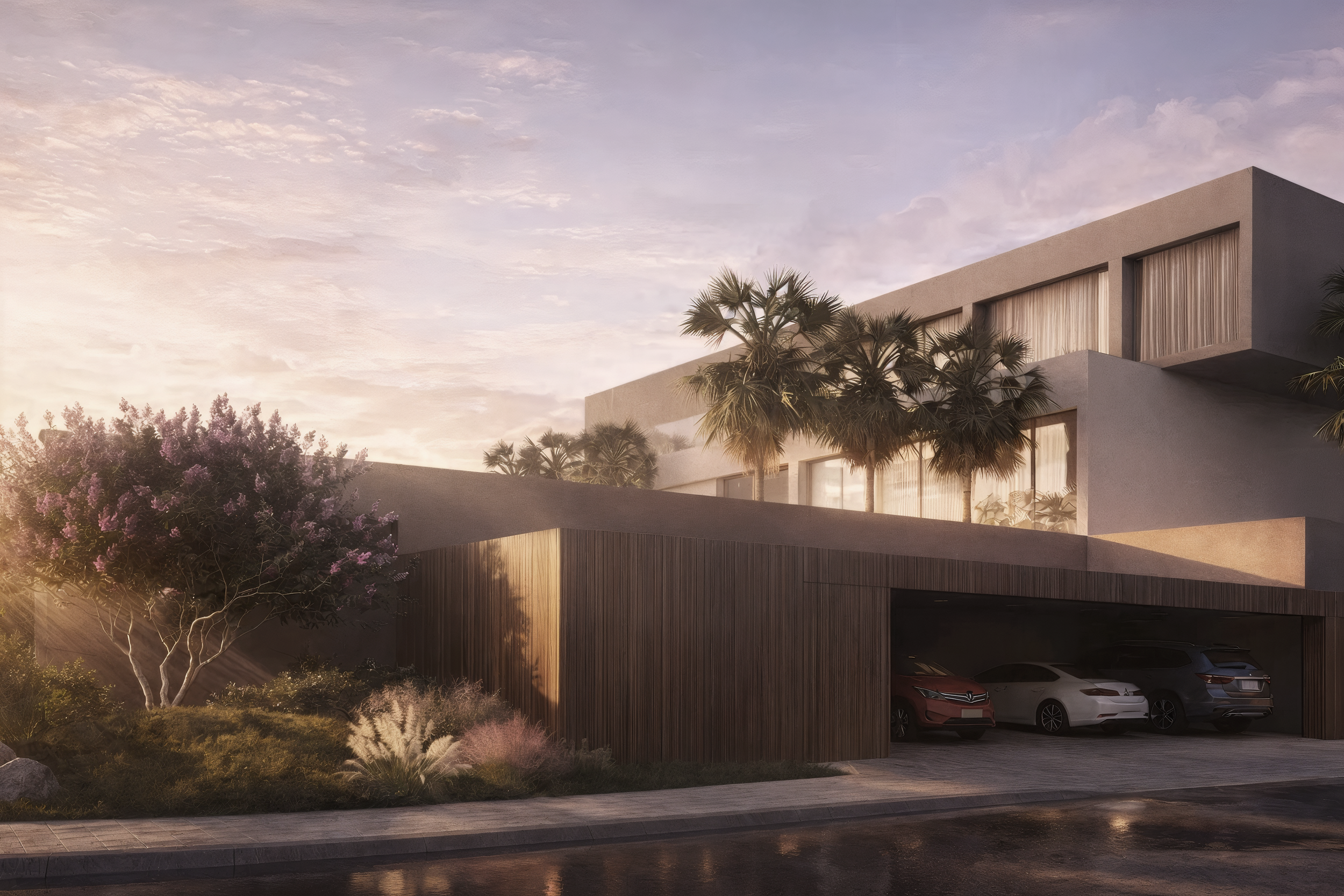
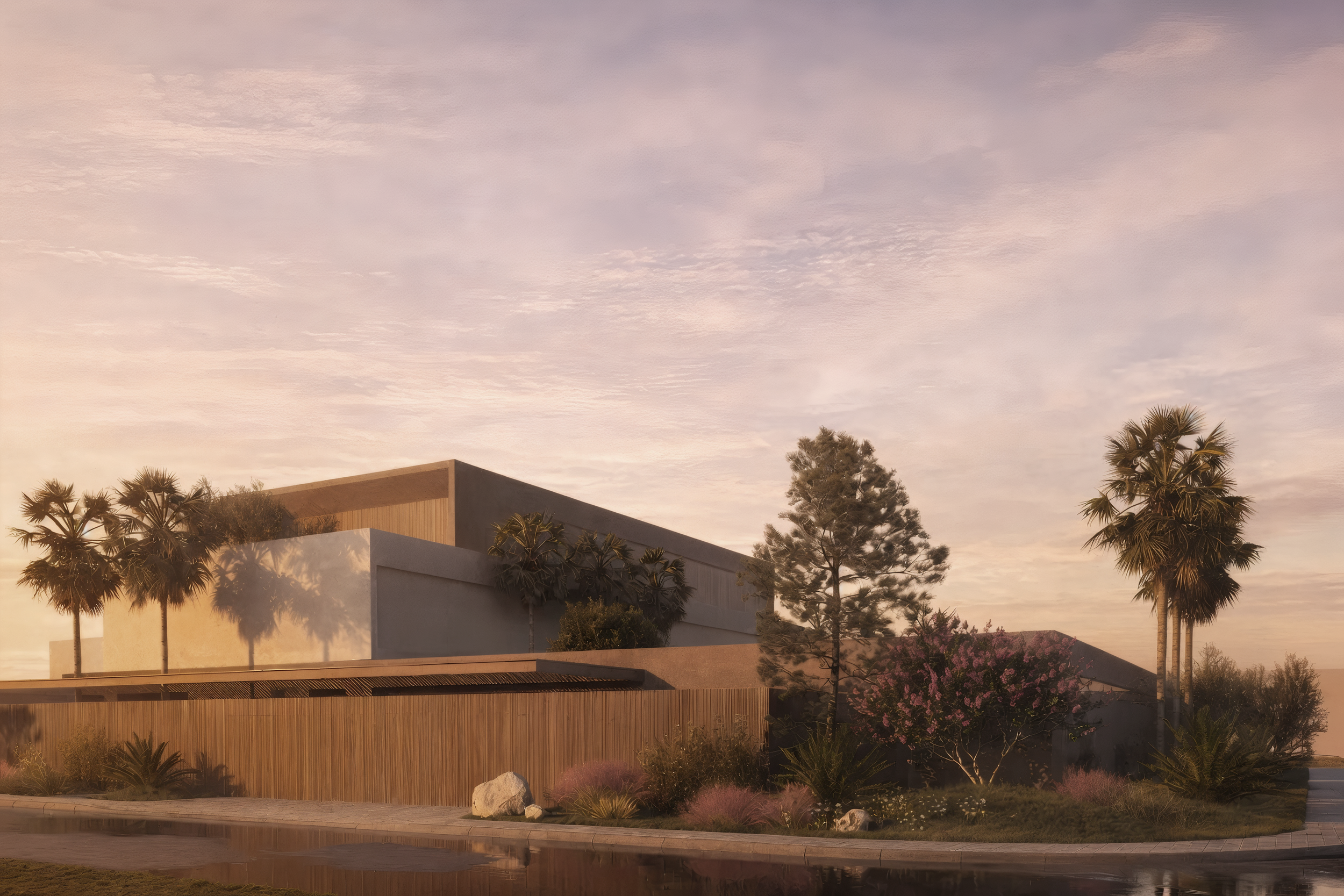
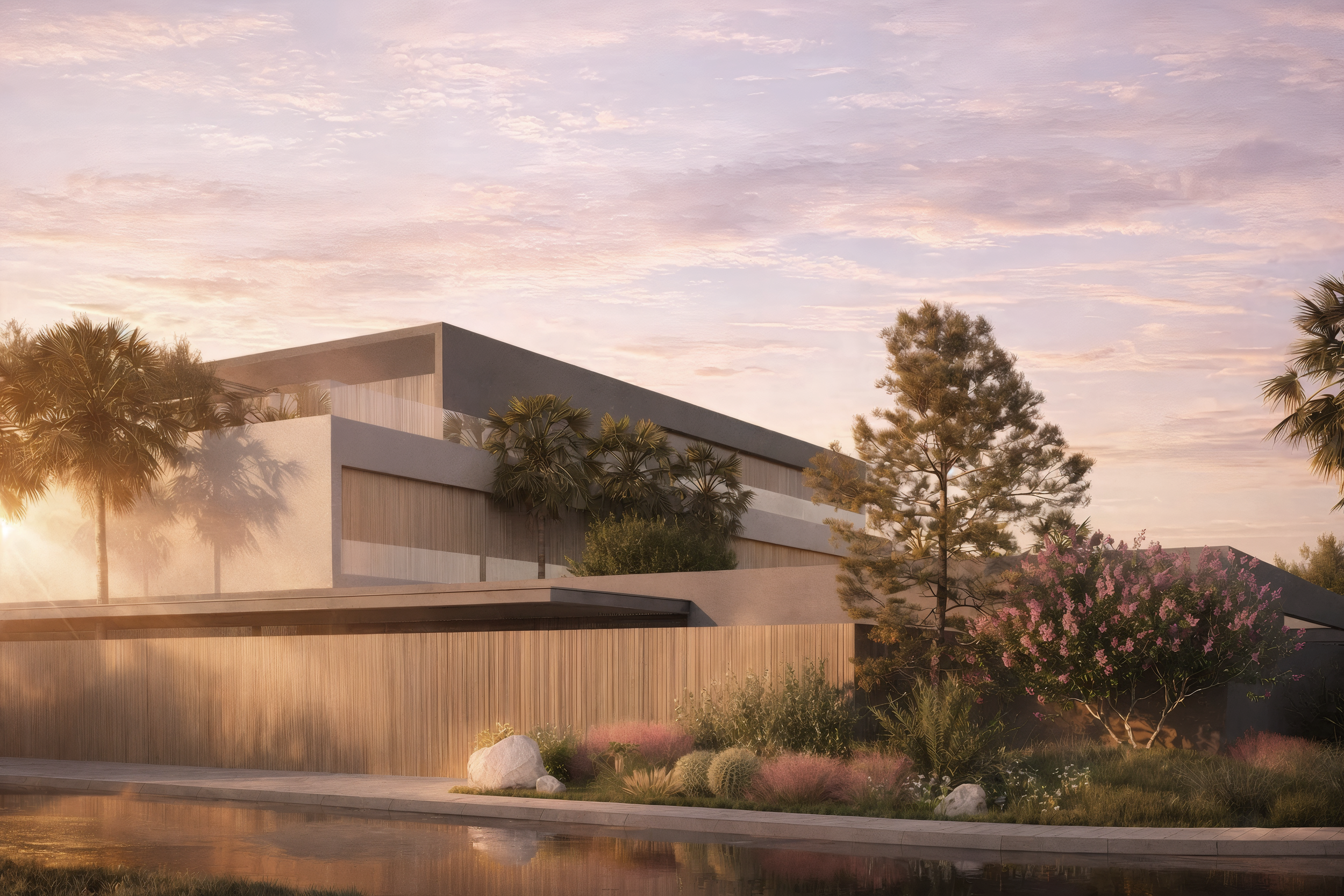
This shift in perception is deliberate. The building is not revealed as a singular object, but as a sequence. From the exterior, the architecture reads as controlled and continuous, while upon entry, it opens into a more porous and layered condition oriented toward the garden.
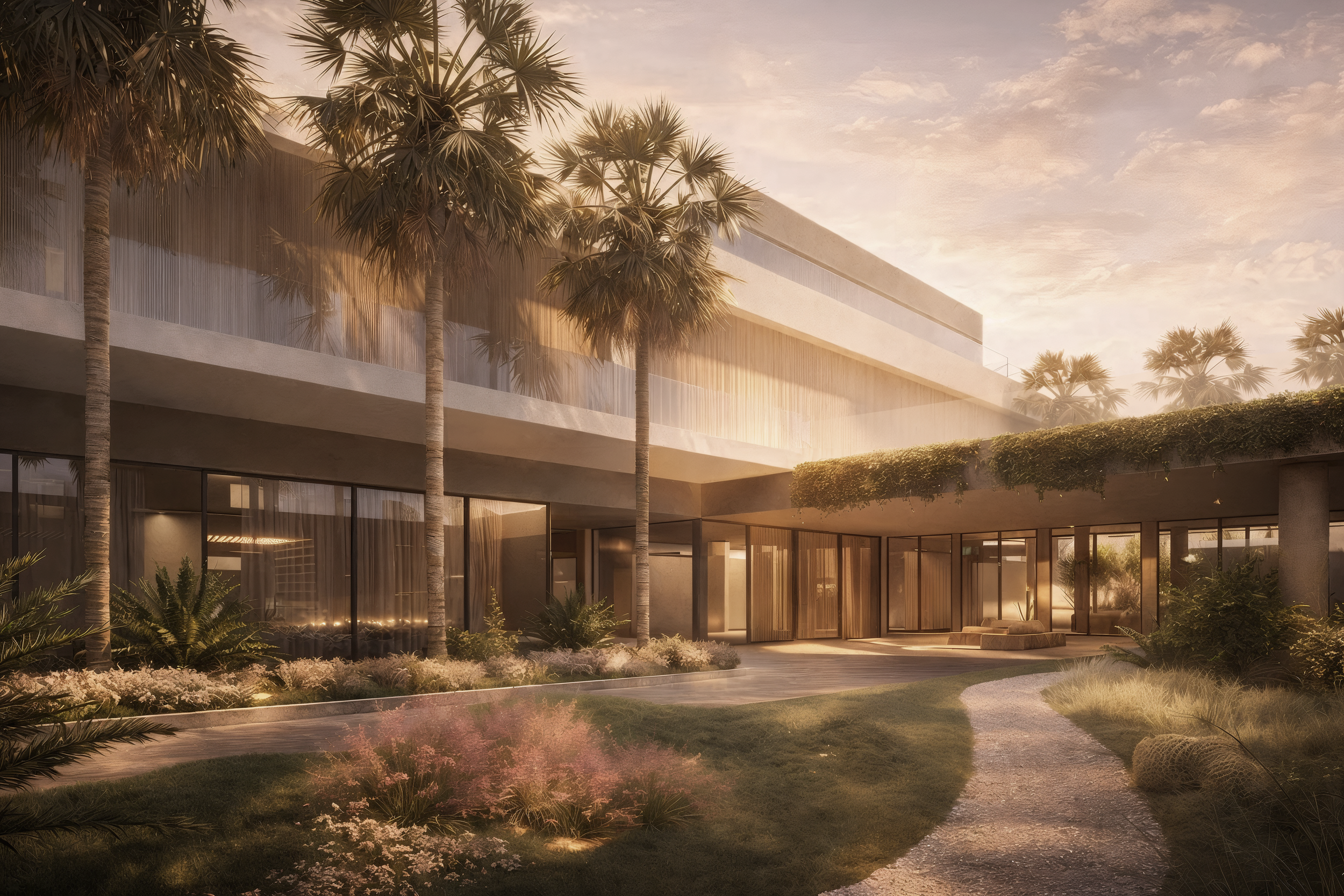
The ground level remains closely tied to the landscape, extending into shaded outdoor spaces and planted thresholds. Above, the upper volumes maintain a more restrained presence, hovering over the garden with controlled openings and filtered light.
Morning House is not simply organized along an edge—it constructs that edge as an architectural device. By thickening the boundary and extending its language outward, the project reframes the relationship between building, garden, and street, allowing the landscape and the architecture to be read as a continuous system rather than separate elements.