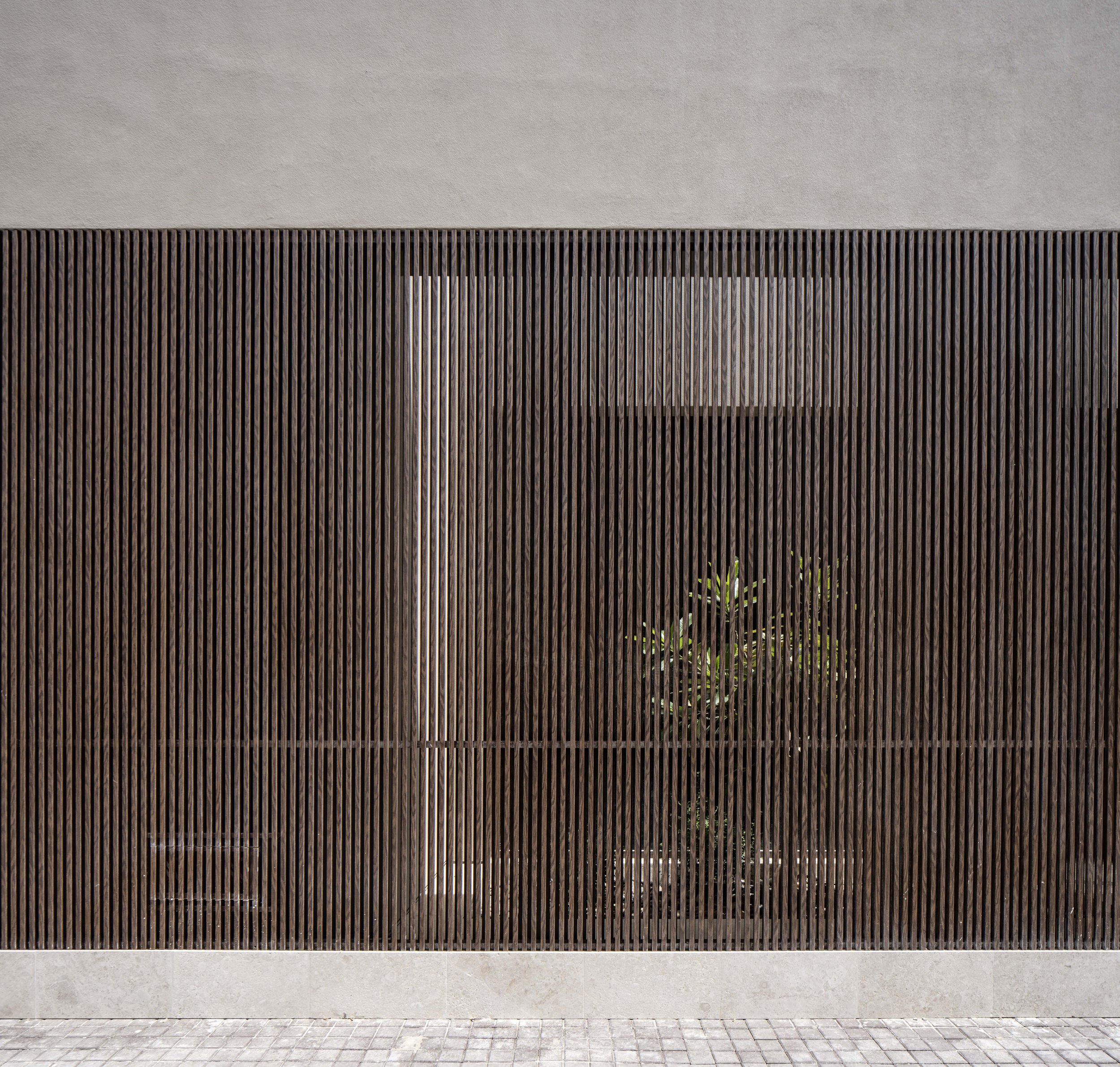
Moon House
Moon House is a distinctive residential project that responds to both regulatory opportunity and urban adjacency in a densely built neighborhood. Constructed on a plot that benefits from a unique planning allowance, the project takes advantage of an exemption from traditional setback requirements, enabling it to build directly up to the neighboring plot line on its eastern side. This rare condition allowed the design to maximize the buildable area while simultaneously introducing new formal and spatial strategies to address its immediate context.
The design challenge lay in negotiating the close proximity to the existing neighboring structure. Rather than concealing or ignoring this condition, the architectural response embraces it — using it as a point of departure for the project’s main conceptual move. A bold, sculpted mass wraps around the eastern edge of the house, serving both as a visual buffer and as a spatial mediator between the two structures. This 'wrapping mass' creates a dialogue between the two built forms while asserting the identity of Moon House as a distinct architectural object.
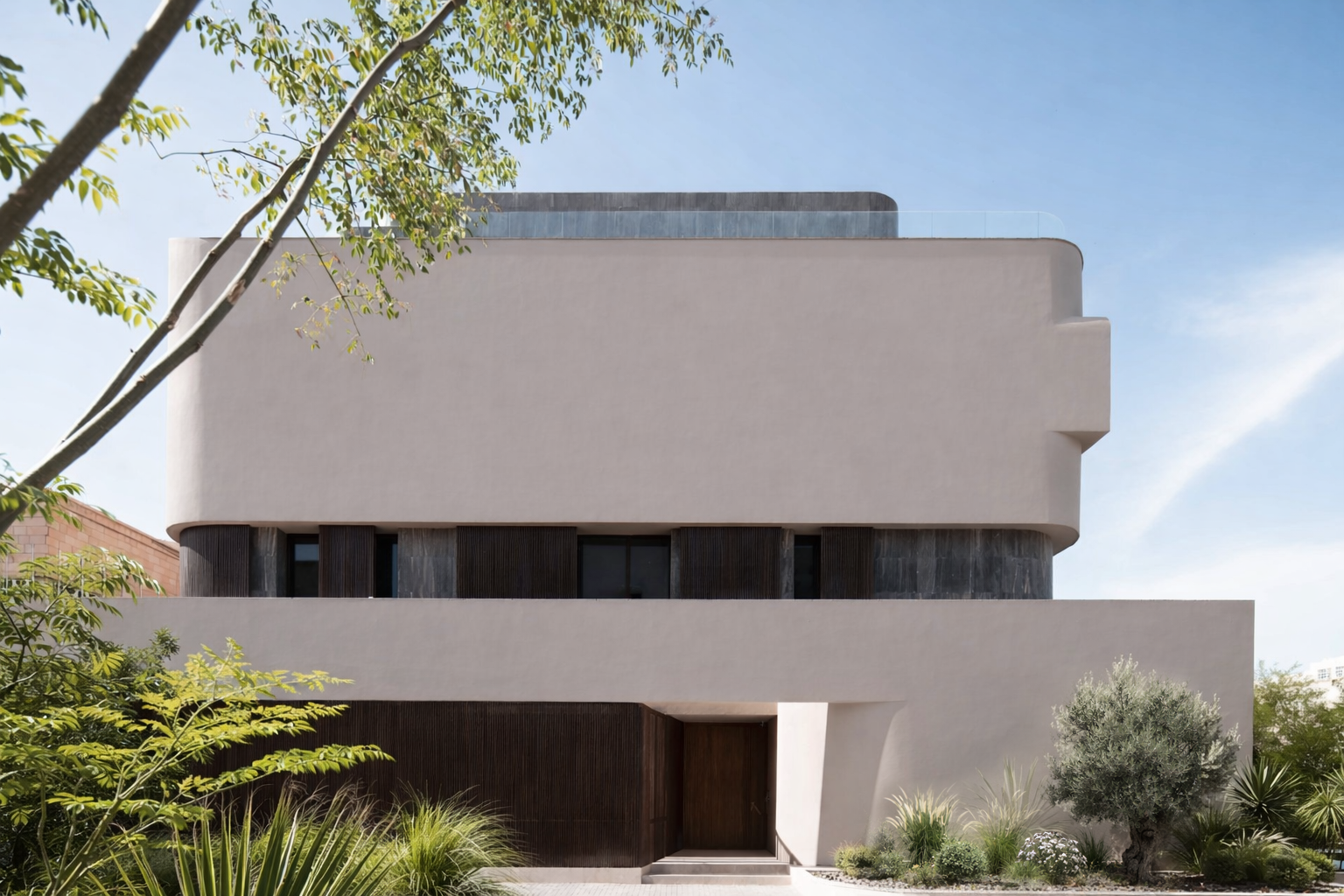
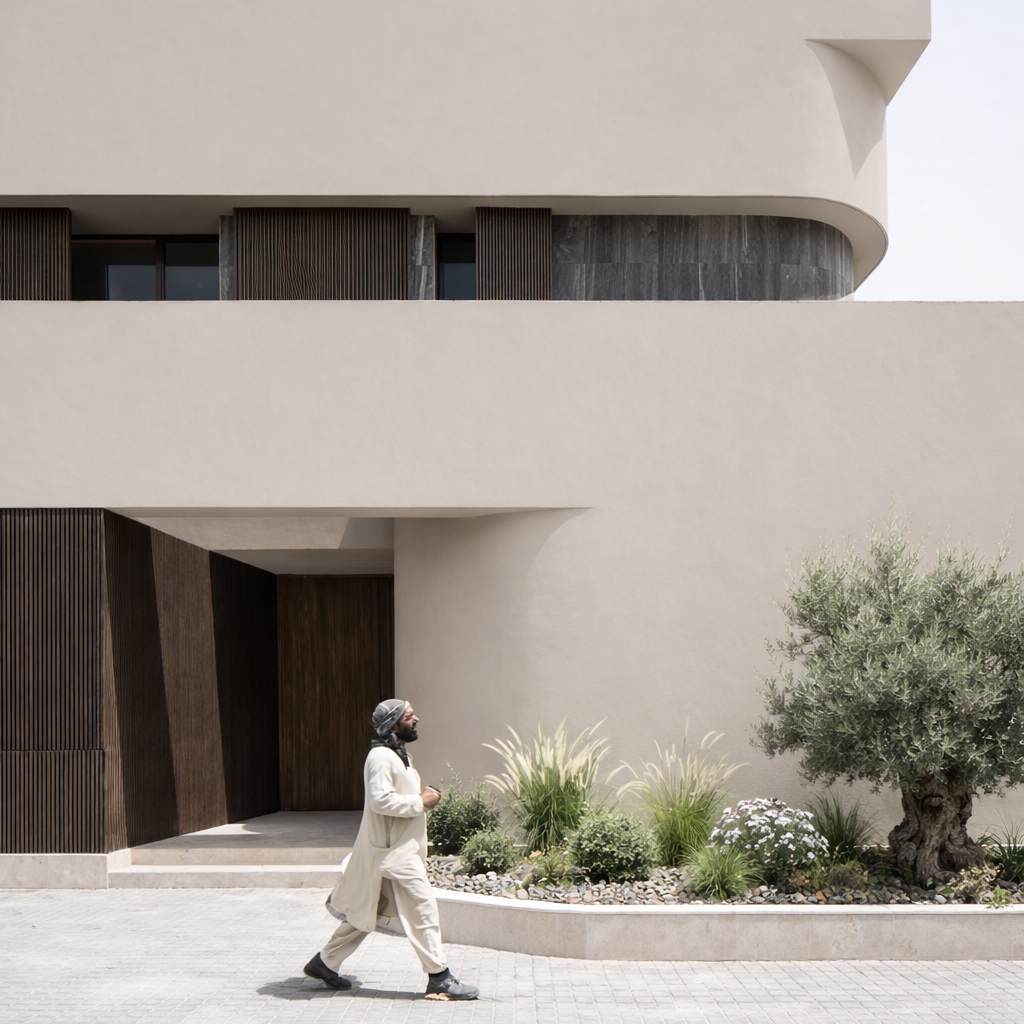
The house is conceived as a composition of two volumes: a grounded base plinth and a lighter, articulated upper mass. The interplay between these elements is emphasized through careful material selection, depth of shadow, and a rhythmic treatment of apertures. The first-floor windows are purposefully placed to visually and tectonically divide the upper volume from the base, accentuating the sense of a solid object resting above a grounded platform.
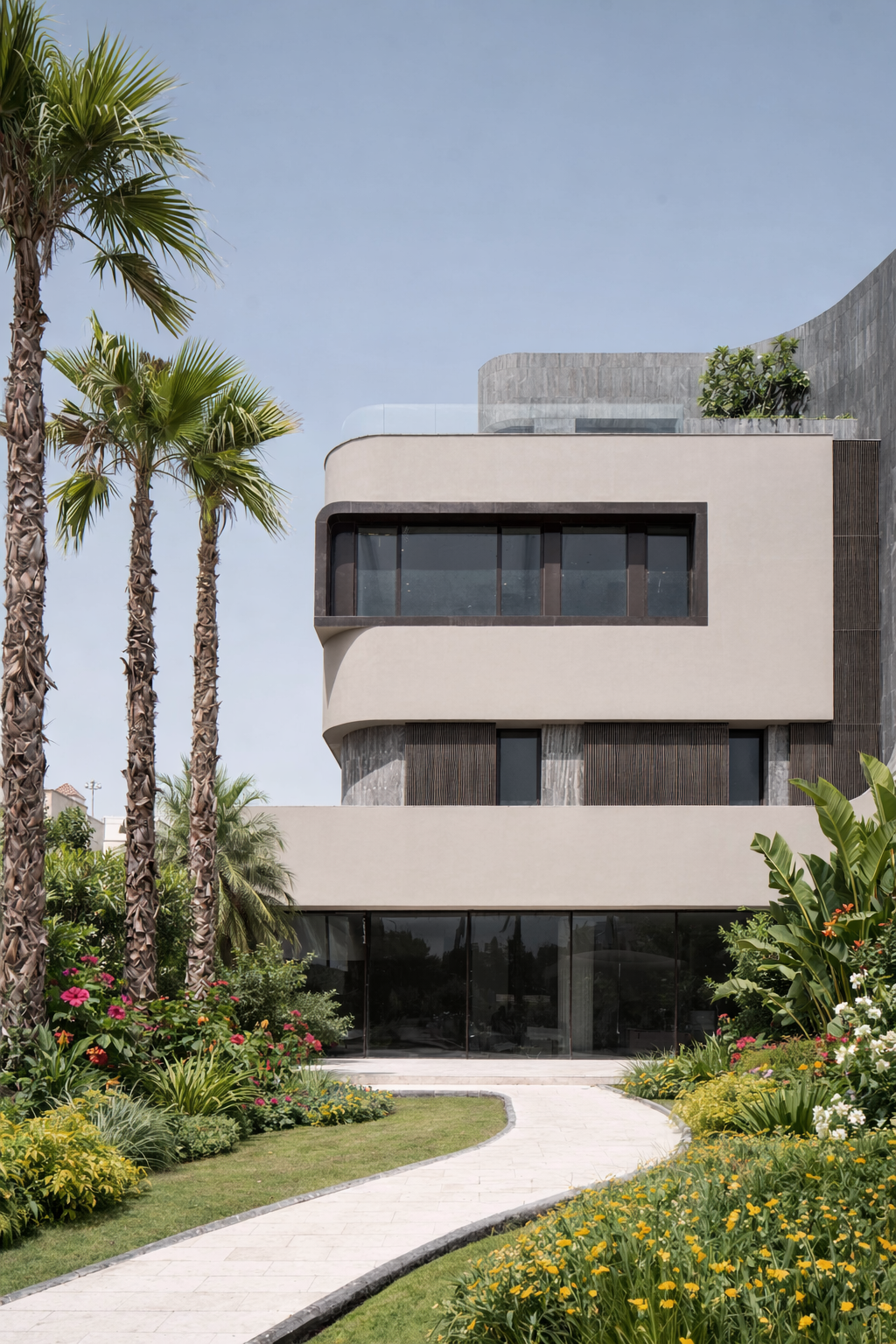
Interior spaces are organized with a deliberate orientation towards the private garden on the western side, in contrast to the more closed-off eastern façade that negotiates the neighbor’s proximity. This inward-facing configuration enhances privacy while creating serene visual connections to nature, fostering a sense of calm and seclusion within the urban fabric.
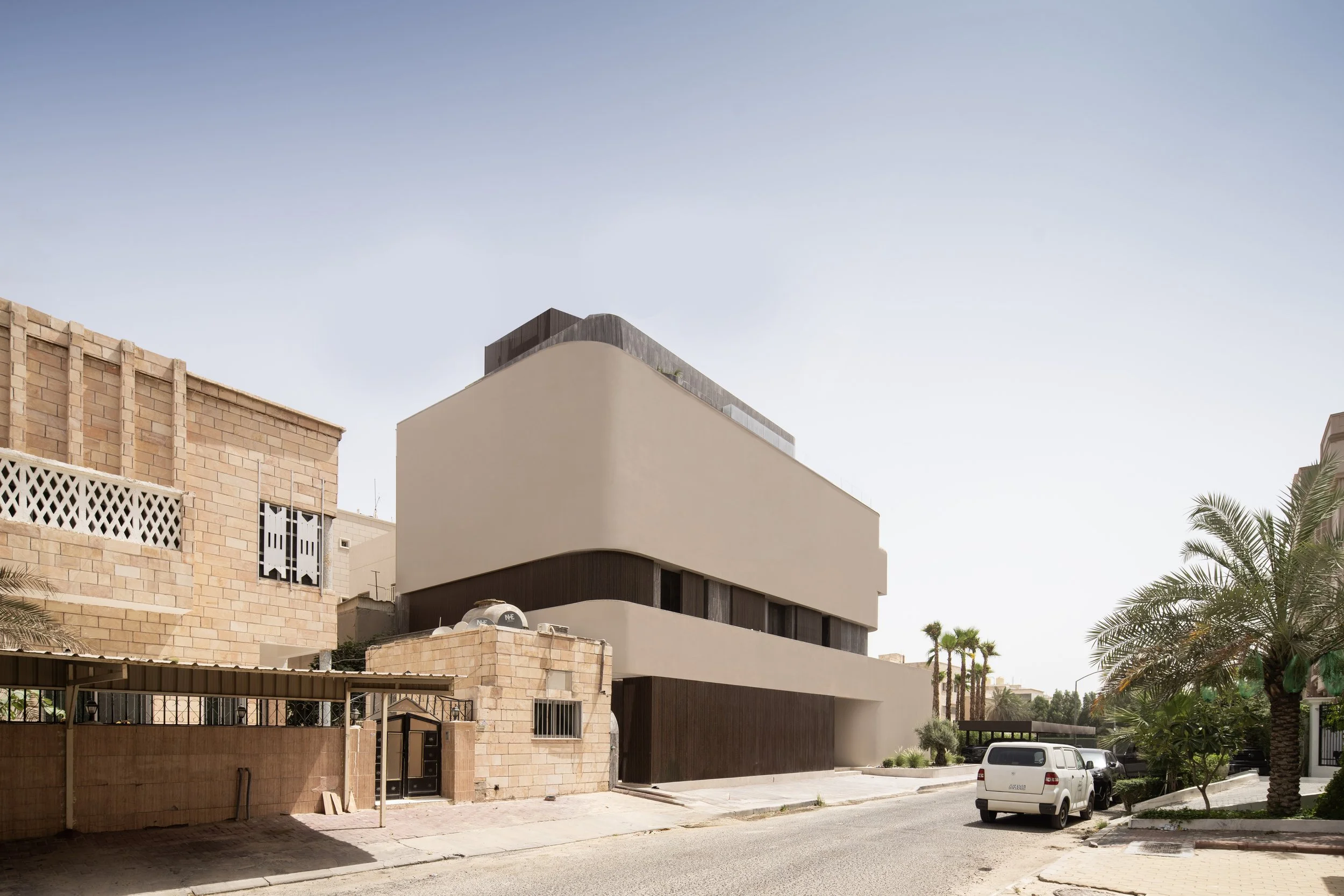
Moon House exemplifies how spatial constraints, regulatory conditions, and contextual adjacency can be transformed into opportunities for formal and conceptual innovation. The result is a house that is at once sculptural and responsive, assertive and respectful — a contemporary residence deeply rooted in its site and context.